Microsoft Dynamics 365 implementation,
configured around a process that was examined first.
We implement Dynamics 365 Finance and Supply Chain, and Business Central, against a process that has already been observed, measured and corrected. Before a module is configured, we prove which processes should exist, which have to change, which need building because nothing in the business does that job yet, and how each one will enforce itself after go-live. Every engagement ends in a working platform, not a report.
Scope, stated plainly. Go2Cab is not a Lean Six Sigma house that also happens to do platforms. The statistical method has one job here: to stop an implementation from locking in a process nobody deliberately chose. It is the means by which a change is proven, never the product being sold.
Assess → Plan → Implement
One engagement, in that order
FinOps & Supply Chain
Dynamics 365 F&O scope
Evidence first
Every change proven, then configured
What Gets Locked Into an ERP When Nobody Checks the Process First?
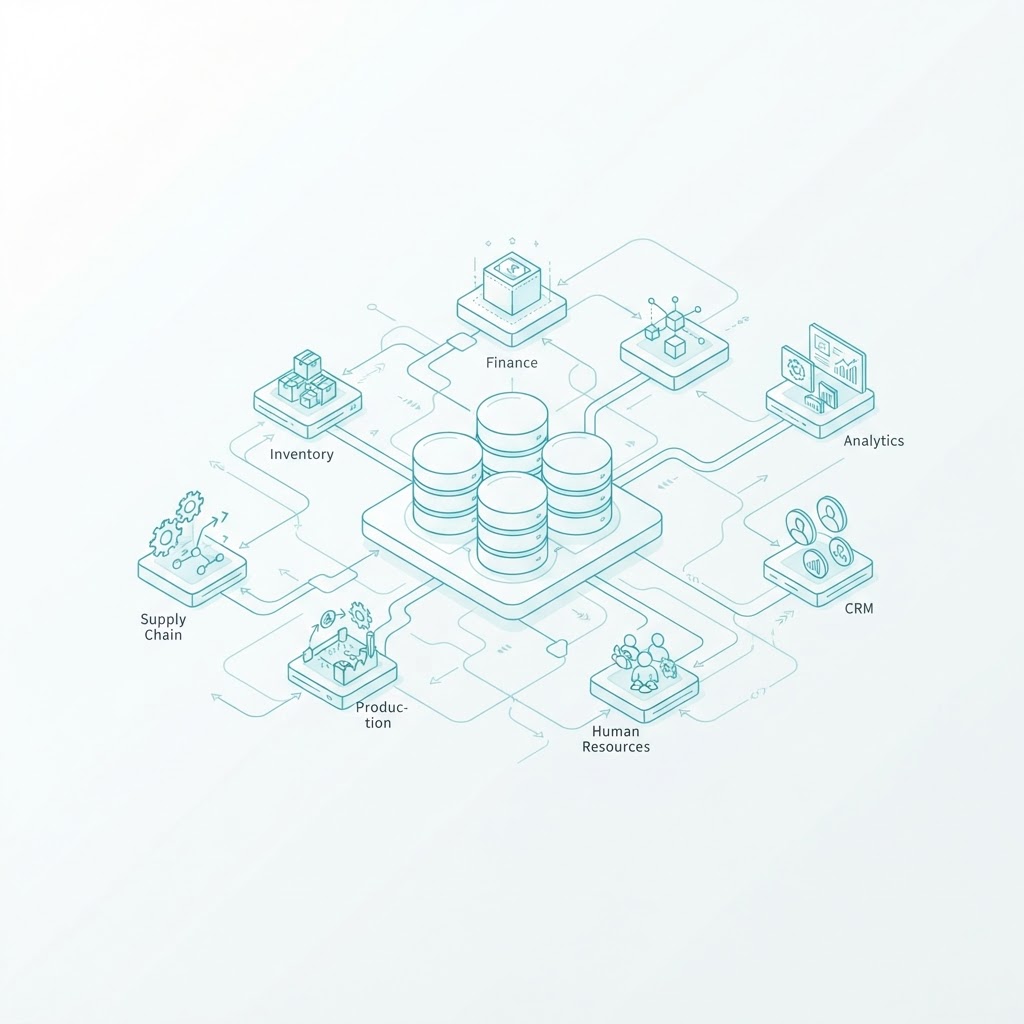
An implementation has no opinion. It encodes what it is given, which is why an inefficient process, once configured, becomes cheap to keep and very expensive to change. These four outcomes are what a requirement-gathering exercise alone cannot see, because each of them looks like a perfectly good requirement at the time.
The workaround becomes the workflow
A step that exists only because two systems never spoke is rebuilt as a formal approval, then defended as policy once it is live. What began as a compromise ends as a control nobody can remove.
Cost: paid for on every transaction, forever.
The control that reports nothing
A control point is configured against a step nobody owns. The exception flags every week, is closed by habit rather than decision, and the dashboard looks like governance.
Cost: effort spent watching a process that should not exist.
The data model inherits the waste
Fields and codes are created to record a process that should have been retired. Every forecast, exception model and Copilot answer downstream then learns from that history.
Cost: analytics that is confident about the wrong question.
The bill arrives at the second project
Correcting a process the platform has already encoded means reconfiguration, retraining and a business case nobody wants to sponsor. The first implementation looked on budget because it changed nothing.
Cost: the whole exercise, run twice.
What Happens Before Anything Is Configured?
Four stages, run in this order on every implementation. The sequence is the method: change the process decision before the platform decision, so configuration has something specific to lock in.
Assess what actually runs
Observed on site rather than described in a workshop: where the work queues, where it is re-keyed, where it waits for a person to return. Cycle time, defect rate and flow are measured on your own data, so the constraint is located rather than guessed.
Ends in
A quantified baseline for every process the platform will carry.
Nominate the change, and prove it is one
Which processes should improve, which should be retired, and which do not exist yet are decided on evidence. Lean Six Sigma tools are used to test that a nominated change is real, worth configuring and likely to hold — not to run a separate improvement programme.
Ends in
A written decision per process: change it, keep it, retire it, or create it.
Design the future process and how it enforces itself
The redesign names the step, the owner, the control point and the exception route — and the mechanism that enforces each one, so the workflow performs the step and records the evidence instead of trusting anyone to remember it.
Ends in
A process specification that can be configured without interpretation.
Configure the platform, then control the gain
Dynamics 365 Finance and Supply Chain, or Business Central, is built to that specification rather than a vendor template. Control points stay live after go-live with a threshold, an owner and a written response, so drift is caught by the system.
Ends in
A working platform that holds the improvement it was built for.
Is Go2Cab a Process-Improvement Consultancy, or a Microsoft Platform Consultancy?
Both descriptions are true and neither is complete, so here is the boundary in plain terms. The method is not the product. It is how we decide what deserves to be built — and it is scoped to the platform work in front of us, not sold on top of it.
What this is not
- A Six Sigma programme sold as an outcome. The tools appear inside the implementation, where they change a decision, never as a parallel stream with its own steering committee.
- Belt certification as a deliverable. A configured process that removes the defect is the deliverable; a certificate is neither necessary nor charged for.
- Process redesign with no owner. If nobody will own the process after go-live, we will not build it into the platform.
- A platform recommendation before the evidence. If the constraint turns out to be a policy, a rota or a supplier term rather than software, you hear that before a licence is discussed.
What it is
- One piece of work, from the first observation to the live control point.
- The improvement method used the way an engineer uses a measuring instrument: to decide, not to demonstrate.
- Design decisions written down, so you can hold the configuration to them afterwards.
- A platform live on a process you deliberately chose, and can defend to an auditor or a board.
Treating the two as separate purchases is how organisations end up with a well-run improvement initiative standing beside an ERP that quietly encodes the process it replaced.
Where Can We Start in Your Implementation?
The right moment depends on how far the programme has gone. All three begin the same way: by observing the process you already run and putting a number against it.
Before the platform decision
Assessment and planning while your options are still open, including whether Dynamics 365, Business Central or nothing at all is the right answer. This is the cheapest point to change direction.
Before go-live, with a programme already running
Configuration may be underway against a process nobody has measured. We review what is being built, nominate what should change, and get it corrected before the design is frozen.
After go-live
The system is live and encodes the process it replaced. We locate where, and fix the process and the configuration together rather than starting again.
Start here
Start with the process you already run.
One conversation, then an assessment scoped to what your platform will actually carry. If the evidence says not to buy a platform, that is a legitimate outcome of the work.
Read the method in detail
- The Six Phases Before We Configure Anything
- The Four-Layer Business Architecture
- Where Digital Transformation Programmes Lose Momentum
For the platform capability itself, see services, and for keeping the capability in-house after go-live, training and BAU support.